Chrysalis Angel

Chrysalis Angel
Becoming an Angel is the work of humans.

CHRYSALIS WELCOMES EVERYONE

Chrysalis' year begins the first Sunday after Labor Day in September. Services are held each Sunday at 10AM to 12 Noon. There will be no services held during August 2014. First meeting in the fall will be September 7, 2014.

Sunday Services from 10 am to 11:30 am each week
805 Mercer's Fernery Road
DeLand, FL (the white 2 story farm house)
Pastor - Skuli Thorhallsson

For more information or counseling phone (386) 478-9201

Email questions or requests to chrysalisgarden@gmail.com

Chrysalis Spiritual Center is a Swedenborg based congregation that studies non-deno
minational topics based on the value of certain writings and speech to society as a whole. Services are frequently presented by guest speakers. No denomination is excluded from meeting with us. We welcome all religions, ages, genders and beliefs.

Saturday, June 25, 2011

EARTH IS FULL


"The world is so full of a number of things,
I'm sure we should all be as happy as kings!"
"A Child's Garden of Verses" Robert Lewis Stevenson


You really do have to wonder whether a few years from now we’ll look back at the first decade of the 21st century — when food prices spiked, energy prices soared, world population surged, tornadoes plowed through cities, floods and droughts set records, populations were displaced and governments were threatened by the confluence of it all — and ask ourselves: What were we thinking? How did we not panic when the evidence was so obvious that we’d crossed some growth/climate/natural resource/population red-lines all at once?
Josh Haner/The New York Times


 “The only answer can be denial,” argues Paul Gilding, the veteran Australian environmentalist-entrepreneur, who described this moment in a new book called “The Great Disruption: Why the Climate Crisis Will Bring On the End of Shopping and the Birth of a New World.” “When you are surrounded by something so big that requires you to change everything about the way you think and see the world, then denial is the natural response. But the longer we wait, the bigger the response required.”

Gilding cites the work of the Global Footprint Network, an alliance of scientists, which calculates how many “planet Earths” we need to sustain our current growth rates. G.F.N. measures how much land and water area we need to produce the resources we consume and absorb our waste, using prevailing technology. On the whole, says G.F.N., we are currently growing at a rate that is using up the Earth’s resources far faster than they can be sustainably replenished, so we are eating into the future. Right now, global growth is using about 1.5 Earths. “Having only one planet makes this a rather significant problem,” says Gilding.

This is not science fiction. This is what happens when our system of growth and the system of nature hit the wall at once. While in Yemen last year, I saw a tanker truck delivering water in the capital, Sana. Why? Because Sana could be the first big city in the world to run out of water, within a decade. That is what happens when one generation in one country lives at 150 percent of sustainable capacity.

“If you cut down more trees than you grow, you run out of trees,” writes Gilding. “If you put additional nitrogen into a water system, you change the type and quantity of life that water can support. If you thicken the Earth’s CO2 blanket, the Earth gets warmer. If you do all these and many more things at once, you change the way the whole system of planet Earth behaves, with social, economic, and life support impacts. This is not speculation; this is high school science.”

It is also current affairs. “In China’s thousands of years of civilization, the conflict between humankind and nature has never been as serious as it is today,” China’s environment minister, Zhou Shengxian, said recently. “The depletion, deterioration and exhaustion of resources and the worsening ecological environment have become bottlenecks and grave impediments to the nation’s economic and social development.” What China’s minister is telling us, says Gilding, is that “the Earth is full. We are now using so many resources and putting out so much waste into the Earth that we have reached some kind of limit, given current technologies. The economy is going to have to get smaller in terms of physical impact.”

We will not change systems, though, without a crisis. But don’t worry, we’re getting there.

We’re currently caught in two loops: One is that more population growth and more global warming together are pushing up food prices; rising food prices cause political instability in the Middle East, which leads to higher oil prices, which leads to higher food prices, which leads to more instability. At the same time, improved productivity means fewer people are needed in every factory to produce more stuff. So if we want to have more jobs, we need more factories. More factories making more stuff make more global warming, and that is where the two loops meet.

But Gilding is actually an eco-optimist. As the impact of the imminent Great Disruption hits us, he says, “our response will be proportionally dramatic, mobilizing as we do in war. We will change at a scale and speed we can barely imagine today, completely transforming our economy, including our energy and transport industries, in just a few short decades.”

We will realize, he predicts, that the consumer-driven growth model is broken and we have to move to a more happiness-driven growth model, based on people working less and owning less. “How many people,” Gilding asks, “lie on their death bed and say, ‘I wish I had worked harder or built more shareholder value,’ and how many say, ‘I wish I had gone to more ballgames, read more books to my kids, taken more walks?’ To do that, you need a growth model based on giving people more time to enjoy life, but with less stuff.” Sounds utopian? Gilding insists he is a realist.

“We are heading for a crisis-driven choice,” he says. “We either allow collapse to overtake us or develop a new sustainable economic model. We will choose the latter. We may be slow, but we’re not stupid.”


“Existence leans its mouth
toward me,
because my love
cares for
it.”

—Meister Eckhart.  By way of Love is a Place.

Hopi Elder
Latest tracks by dreaming in the void blog


---------------------------------------------------------------------------------------------------------


Keep your hands
Open, and
All the sands
Of the desert can
Pass through them.

Close them, and
All you can feel
Is a bit of grit.
Taisen Deshimaru, “Attachment”


Everything you give, you get back, times seven.
Plus, what you give, grows, times seven. Plus plus, there’s a little known intergalactic algorithm that states whenever love is added to the giving, your desires draw ever closer to the giver.    
 Whoa! The Universe

A FRESH LOOK AT AN OLD POEM

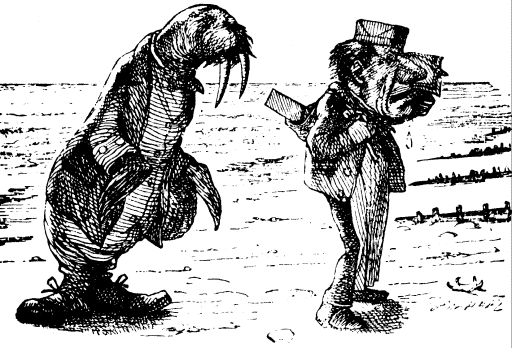
The Walrus and The Carpenter


from Through the Looking-Glass and What Alice Found There, 1872   Lewis Carroll

The sun was shining on the sea,
Shining with all his might:
He did his very best to make
The billows smooth and bright--
And this was odd, because it was
The middle of the night.


The moon was shining sulkily,
Because she thought the sun
Had got no business to be there
After the day was done--
"It's very rude of him," she said,
"To come and spoil the fun!"


The sea was wet as wet could be,
The sands were dry as dry.
You could not see a cloud, because
No cloud was in the sky:
No birds were flying overhead--
There were no birds to fly.


The Walrus and the Carpenter
Were walking close at hand;
They wept like anything to see
Such quantities of sand:
"If this were only cleared away,"
They said, "it would be grand!"


"If seven maids with seven mops
Swept it for half a year.
Do you suppose," the Walrus said,
"That they could get it clear?"
"I doubt it," said the Carpenter,
And shed a bitter tear.


"O Oysters, come and walk with us!"
The Walrus did beseech.
"A pleasant walk, a pleasant talk,
Along the briny beach:
We cannot do with more than four,
To give a hand to each."


The eldest Oyster looked at him,
But never a word he said:
The eldest Oyster winked his eye,
And shook his heavy head--
Meaning to say he did not choose
To leave the oyster-bed.


But four young Oysters hurried up,
All eager for the treat:
Their coats were brushed, their faces washed,
Their shoes were clean and neat--
And this was odd, because, you know,
They hadn't any feet.


Four other Oysters followed them,
And yet another four;
And thick and fast they came at last,
And more, and more, and more--
All hopping through the frothy waves,
And scrambling to the shore.


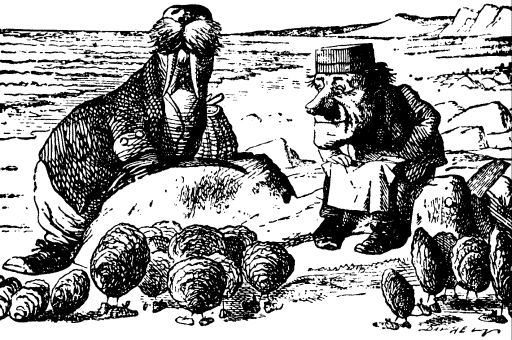
The Walrus and the Carpenter
Walked on a mile or so,
And then they rested on a rock
Conveniently low:
And all the little Oysters stood
And waited in a row.


"The time has come," the Walrus said,
"To talk of many things:
Of shoes--and ships--and sealing-wax--
Of cabbages--and kings--
And why the sea is boiling hot--
And whether pigs have wings."


"But wait a bit," the Oysters cried,
"Before we have our chat;
For some of us are out of breath,
And all of us are fat!"
"No hurry!" said the Carpenter.
They thanked him much for that.


"A loaf of bread," the Walrus said,
"Is what we chiefly need:
Pepper and vinegar besides
Are very good indeed--
Now if you're ready, Oysters dear,
We can begin to feed."


"But not on us!" the Oysters cried,
Turning a little blue.
"After such kindness, that would be
A dismal thing to do!"
"The night is fine," the Walrus said.
"Do you admire the view?


"It was so kind of you to come!
And you are very nice!"
The Carpenter said nothing but
"Cut us another slice:
I wish you were not quite so deaf--
I've had to ask you twice!"


"It seems a shame," the Walrus said,
"To play them such a trick,
After we've brought them out so far,
And made them trot so quick!"
The Carpenter said nothing but
"The butter's spread too thick!"


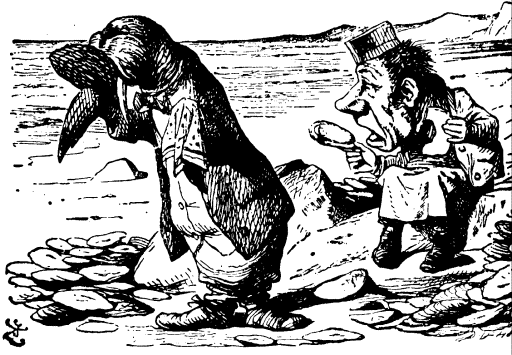
"I weep for you," the Walrus said:
"I deeply sympathize."
With sobs and tears he sorted out
Those of the largest size,
Holding his pocket-handkerchief
Before his streaming eyes.


"O Oysters," said the Carpenter,
"You've had a pleasant run!
Shall we be trotting home again?'
But answer came there none--
And this was scarcely odd, because
They'd eaten every one.

NAMASTE


Chrysalis Spiritual Center


Wednesday, June 1, 2011

Thoughts, Grief, Gay Funerals,

 
 Om bhurbhuvah swah tatsaviturvarenyam
bhargo devaasya dhimahi dhiyo yonah prachodayat

Oh Almighty!
We meditate upon the adorable radiant, the divine sun!
May he unfold and give direction to our intellects
to go on the right path!
rigveda 3:62:10 - 4000 b.c.e. ±


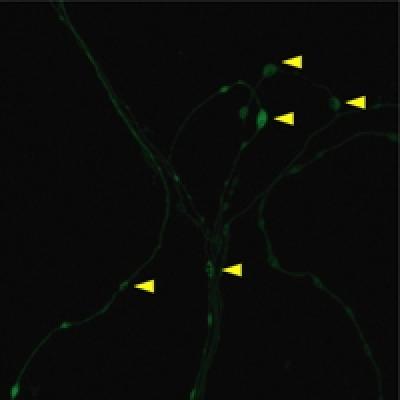
The increase in green fluorescence represents the imaging of local translation at synapses during long-term synaptic plasticity. (Photo Credit: Science)
Birth of a Thought

The ability to learn and to establish new memories is essential to our daily existence and identity; enabling us to navigate through the world. A new study by researchers at the Montreal Neurological Institute and Hospital (The Neuro), McGill University and University of California, Los Angeles has captured an image for the first time of a mechanism, specifically protein translation, which underlies long-term memory formation. The finding provides the first visual evidence that when a new memory is formed new proteins are made locally at the synapse - the connection between nerve cells - increasing the strength of the synaptic connection and reinforcing the memory. The study published in Science, is important for understanding how memory traces are created and the ability to monitor it in real time will allow a detailed understanding of how memories are formed.

When considering what might be going on in the brain at a molecular level two essential properties of memory need to be taken into account. First, because a lot of information needs to be maintained over a long time there has to be some degree of stability. Second, to allow for learning and adaptation the system also needs to be highly flexible.

For this reason, research has focused on synapses which are the main site of exchange and storage in the brain. They form a vast but also constantly fluctuating network of connections whose ability to change and adapt, called synaptic plasticity, may be the fundamental basis of learning and memory.

"But, if this network is constantly changing, the question is how do memories stay put, how are they formed? It has been known for some time that an important step in long-term memory formation is "translation", or the production, of new proteins locally at the synapse, strengthening the synaptic connection in the reinforcement of a memory, which until now has never been imaged," says Dr. Wayne Sossin, neuroscientist at The Neuro and co-investigator in the study. "Using a translational reporter, a fluorescent protein that can be easily detected and tracked, we directly visualized the increased local translation, or protein synthesis, during memory formation. Importantly, this translation was synapse-specific and it required activation of the post-synaptic cell, showing that this step required cooperation between the pre and post-synaptic compartments, the parts of the two neurons that meet at the synapse. Thus highly regulated local translation occurs at synapses during long-term plasticity and requires trans-synaptic signals."


Long-term memory and synaptic plasticity require changes in gene expression and yet can occur in a synapse-specific manner. This study provides evidence that a mechanism that mediates this gene expression during neuronal plasticity involves regulated translation of localized mRNA at stimulated synapses. These findings are instrumental in establishing the molecular processes involved in long-term memory formation and provide insight into diseases involving memory impairment.

This study was funded by the National Institutes of Health, the WM Keck Foundation and the Canadian Institutes of Health Research.


Existential Grief

We are all made of energies. Some, such as auras, are so subtle few people can sense them. Others are so gross they have turned into muscle and bone. Humans seem to have a number of different energies. The most vital of these, the one that gave us our birth, so to speak, and the powerful quality of aliveness in every creature, is the lifeforce. Another, the kundalini, is the bridge connecting the lifeforce to the spirit, just as the soul connects the ego to spirit. Mind contains other forms of energy, as do our emotions - and there is essence.

Essence belongs to all living creatures. They are born with it. The experience of essence cannot be adequately described in words, but it is unmistakable. Essence can be sensed in qualities such as will, joy, strength and love. It has presence. We feel authentic and at home in our world. Hanging out, touching a leaf, making love - all the everyday things - take on a deeper significance. With essence life is calm and steady, without emotional drama. It is a felt experience, but not a feeling. It is pure pleasure. It is our nature.

A cat has essence, beingness, spaciousness and all those other qualities which characterise a natural organism. It is gifted with this in its birth, as we are. But a cat lacks self-awareness. It has not the capacity to transcend itself in order to raise its consciousness to a higher level. When we reconnect with essence we connect once again with our original level of being at birth. But essence cannot take us higher without a conscious connection to the soul, for only another spiritual energy can be the bridge to the Self, and essence is not a spiritual force. If we have retained some contact with our soul, reclaiming essence can bring the two together again; but, if we have lost our soul altogether, essence may not on its own bring it back.

Essence is enlivened by the lifeforce, which is the energy of our daily vitality. The lifeforce is a separate entity and we are the vessel through which it flows. An abundance of lifeforce is the foundation of spiritual work. Unrestricted, it brings pleasure and open curiosity and high energy - just those qualities least tolerated by our parents.

At birth, essence and lifeforce are flowing naturally within an unrestricted inner spaciousness where there are no blocks or closures to impede it. In this sense we are empty inside. It is not that there is nothing going on, but rather that the flow of energy is so free and unimpeded we seem to contain a natural emptiness through which life and essence moves. We feel hugely spacious. It is like the wind blowing through the trees: the air and the trees exist, yet there is space around and between that allows the breeze to pass this way and that.

The induction of energetic nodes and the pain of separation begin to block these breezes. Suppressing the normal ebullience of our lifeforce blocks the winds even more. Under constant pressure from our parents to conform to their roles and images we tie ourselves down in the hope of pleasing them. We become full of sadness that we have died to who we are. Easeful space turns into a black emptiness. Part of us may wish to die in body as we have died inside, often leading to sickness and physical weakness. How many truly mourned this loss at the time? It only takes the death of someone we love to trigger a deep pool of utter grief that feels as if it has been lying in wait for this moment. We had hidden it, for if we had let ourselves truly grieve for our own inner death we would have been alive in that moment - but that moment would have been too painful for us and our parents to allow without restricting in some way. This is called existential grief, the unbearable sorrow at our loss of what gave us our existence in the first place. Shutting it off also shuts down some part of our humanity.

By the age of four most of us will have accommodated to this loss, and be well on the way to replacing essence with ego. Our capacity to do this stems from those qualities which raised us above the rest of creation - our unique ability as a child for self-reflection and self-modification which could monitor our behaviour and change it. The blessing is it will be the same qualities that can lead us back again. Our cross is also our gift.

For example, true will - the natural inborn strength and cohesiveness that is expressed in every baby - was trodden on by parents who could not stand the noise, the importunity, or even the utter truthfulness this will brought to life. So the infant replaced it with a more acceptable if artificial will which kept the peace and the hope for some of mother’s love.

Similarly with the lifeforce. Adults generally fear that the lifeforce in their children will overpower them - mirroring that they were themselves overpowered by parents who could not abide their exuberance. Being constantly hushed, nearly all of us decided from a very early age that it would be safer to be compliant and pleasing than be ourselves. So we put great energy into suppressing the lifeforce and our bodies are tired out by the effort, giving us permission to be as dead as the adults.

From this comes shame that our deepest vitality is hated and our essential nature is unacceptable to those we love most. Blocking the lifeforce is painful. The ego transforms this pain into the denial of self-worth T S Elliot called “the cancer that eats away the soul”. It is one root of the terrible fear that we are flawed - fundamentally and eternally. The resulting loss of confidence spreads emptiness over everything until we are lost in it. Emptiness becomes equated with uncertainty. Yet this emptiness is the home of just those qualities of unrestricted spaciousness that would most capably support us in dealing with the loss.

Pat recalled the very satisfactory feeling of emptiness he had as a baby which came with shitting and pissing, in the easy flowing out and the release of pressure. But at the same time his bowls reacted to his mother’s anxiety with a feeling of loss that was also an emptiness - the existential emptiness from loss of self. He began to link the two feelings. Voiding his bowls felt like his essence was flowing out leaving him both physically and emotionally empty, especially around the genitals. As sexual feelings were added to these nodes he came to long for this hole to be filled sexually.

As we lose essence and restrict our lifeforce we create false qualities to take their place. Paradoxically, we then feel pleasure in restricting ourselves. This strange situation arises because the lifeforce cannot be killed, but instead turns negative. As we are using the very energy of the lifeforce to block itself, the pleasure inherent in this force always remains hidden just beneath the surface. Because pleasure and life are one and the same, when pleasure is linked to destructiveness, destructiveness cannot be given up - it feels as if life itself were being given up. Thus the widespread guilt that accompanies most of our pleasures and numbs our feelings.

This is why we cannot use affirmations or meditations to replace negative feelings with positive ones. Negativities have to be converted back to their original free state by feeling the pleasure in the unpleasure. Trying to replace destructive feelings with positive ones merely pushes the negativity deeper into the shadow.

The state of our lifeforce and psychic nodes is reflected in our chakras. These are spots in the body where distorted or polluted energies collect. They may appear as shafts of light, spinning wheels or bursts of energy to those who can see them. Different cultures count them in different ways and assign different qualities to them. The West has, on the whole, accepted the Indian chakra system where there are seven centres from the groin to the crown of the head. The more primitive and instinctual components are at the bottom and the higher, that connect us to the Spirit, are at the top. As we clear and purify the emotional and physical bodies the chakras also become clear and, as the journey proceeds, they disappear altogether.

Aligned with the lifeforce, but separate from it, is the kundalini. This is the bridge between life’s vitality and the spiritual realm. It is a massive force, huge and ungovernable that, well handled, will scarify the energy systems of the body. The kundalini is the presence of God within our lifeforce, and in Indian lore it resides at the base of the spine, coiled like a serpent waiting to arise. But if we have the kundalini before we are prepared, we are sending 5000 volts through a 120 volt wire. It can be a terrible experience: do not wish for it until you are already well on the journey, for it won’t necessarily leave you better off. It is an energy that should be guided and encouraged in small quantities, when it can be highly beneficial and transformative.

To steady itself against emptiness and negativity the ego develops boundaries. They may be very open or tough as steel. They may collapse when a loved one is nearby, leaving you too personable and vulnerable, or they may grow thorns to prick any who approach too closely. Whatever its final form, the boundary protects the child from his own emptiness. This is where ambivalence is born. On the one hand he avoids his emptiness by strengthening ego-based boundaries and, on the other, he yearns for the promise of beingness and oneness that emptiness contains. Thus he is at one and the same time creating and demolishing his own framework. This is both exhausting and dispiriting.

Boundaries should be affirmed and consolidated, so we are able to direct their strength and porosity at will. Then, as we gain more of our original qualities back and our natural spaciousness moves into consciousness, the need for an outer barrier is replaced by an inner solidity and serenity.

Loss of essence and lifeforce need not be permanent. They are only in hiding. Removing the blocks has a huge effect on our lives: we are filled with pleasure and there is no fear. When the lifeforce is strong we exist, and then the other exists also. Nothing that comes from the pleasure current can do us ill.

To heal the emptiness we remind the inner child of what it knew but has forgotten. Whenever we can embody subtle impressions so they achieve the same reality they had when we were young, there will be deep changes. We do this by using our senses to make the hollow more tangible and, if we can bear to stay with the experience, by bringing our full awareness to the emptiness. Then negativity changes to something positive and a spaciousness may appear. Almaas describes how “space eliminates our defences, our identification with personality. Then essence unfolds and flowers in its various beautiful manifestations. Filling and bathing our sexual area, this essence allows us to feel rooted in its beauty and certainty. Our sexuality is our relatedness, our grounding in being where we experience our nature as pure, unadulterated pleasure and preciousness.”

Southern Hemisphere Distributor: West Grinstead Publications - contact: gothic@johnjames.com.au
Written by John James

Is This Human? or Huwoman?
Archaeologists investigating a 5,000-year-old Copper Age grave in the Czech Republic believe they may have unearthed the first known remains of a gay or transvestite caveman, reports the Telegraph.

The man was apparently buried as if he were a woman, an aberrant practice for an ancient culture known for its strict burial procedures.

Since the grave dates to between 2900 and 2500 BC, the man would have been a member of the Corded Ware culture, a late Stone Age and Copper Age people named after the unique kind of pottery they produced. Men in this culture were traditionally buried lying on their right side with their heads pointing west, but this man was instead buried on his left side with his head pointing east, which is how women were typically buried.

“From history and ethnology, we know that people from this period took funeral rites very seriously so it is highly unlikely that this positioning was a mistake,” said lead archaeologist Kamila Remisova Vesinova. “Far more likely is that he was a man with a different sexual orientation, homosexual or transsexual.”

Another clue is that Corded Ware men would typically be buried alongside weapons, hammers and flint knives, as well as food and drink to prepare them for their journey to the other side. But this man’s grave instead contained only a traditional egg-shaped pot, which was what women were typically buried with.

With all the evidence taken together, archaeologists are confident that the best explanation for the strange burial is that the man was effeminate, perhaps a homosexual, and possibly a transvestite.

“We believe this is one of the earliest cases of what could be described as a ‘transsexual’ or ‘third gender grave’ in the Czech Republic,” reiterated cooperating archaeologist Katerina Semradova.

Semradova also noted that archaeologists from a previous dig had uncovered a grave from the Mesolithic period where a female warrior was buried as a man, so mixed gender burials, though rare, were not unprecedented.
 
 
A Meditation
You would know the secret of death.
But how shall you find it unless you seek it in the heart of life?
The owl whose night-bound eyes are blind unto the day
cannot unveil the mystery of light.
If you would indeed behold the spirit of death,
open your heart wide unto the body of life.
For life and death are one,
even as the river and the sea are one.

In the depth of your hopes and desires
lies your silent knowledge of the beyond;
And like the seeds dreaming beneath the snow
your heart dreams of spring.
Trust the dreams,
for in them is hidden the gate to eternity.
Your fear of death is but the trembling of the shepherd
when he stands before the king whose hand
is to be laid upon him in honour.
Is the shepherd not joyful beneath his trembling,
that he shall wear the mark of the king?
Yet is he not more mindful of his trembling?

For what is it to die but to stand naked in the wind
and to melt into the sun?
And what is it to cease breathing,
but to free the breath from its restless tides,
that it may rise and expand and seek God unencumbered?

Only when you drink from the river of silence
shall you indeed sing.
And when you have reached the mountain top,
then you shall begin to climb.
And when the earth shall claim your limbs,
then shall you truly dance.
on death - Kahlil Gibran

Affirmation

I am a being of light. Angels are all around me, helping and guiding me at all times. I am safe and I am loved. Everything in my life happens at just the right time, in just the right place and in the best way for my highest good. And so it is.

Monday, May 2, 2011

MAY FLITTER 2011

 Neither fire nor wind, birth nor death can erase our good deeds.   Buddhist quote

THE FOUR AGREEMENTSa book review


The information below is from Wikipedia. We had a conversation last week about the Four Agreements and here is the missing information. 

Don Miguel Ángel Ruiz (born 1952), better known as Don Miguel Ruiz, is a Mexican author of New Age spiritualist and neoshamanistic texts. His teaching is significantly influenced by the work of Carlos Castaneda.

His most famous and influential work, The Four Agreements, was published in 1997 and has sold around 4 million copies It was featured on the Oprah television show, and advocates personal freedom from agreements and beliefs that we have made with ourselves and others that are creating limitation and unhappiness in our lives. Ultimately, it is about finding one's own integrity, self-love, and peace by way of absolving oneself from responsibility for the woes of others. The Four Agreements are:
  1. Be Impeccable With Your Word.
  2. Don't Take Anything Personally.
  3. Don't Make Assumptions.
  4. Always Do Your Best.
Ruiz also wrote a companion book to The Four Agreements. He then wrote several other books, including The Voice of Knowledge, Prayers, and The Mastery of Love.
Ruiz has subsequently released a sequel, The Fifth Agreement, which adds a further agreement:
5. Be skeptical, but learn to listen.
In Mary Carroll Nelson's Beyond Fear, he discusses some of his beliefs through a series of interviews, including his belief in the legend of Atlantis; his belief that the sun entered its sixth age on January 11, 1992, which should lead to a new age for humanity; and his belief in the spiritual power of the pyramid of the sun at Teotihuacan. He can speak English. He often lectures and leads retreats in the United States. Many of his students are American. In 2002 he suffered a massive heart attack, and spent nine weeks in a coma, but recovered although he was in pain for the next 8 years.

He has handed the Eagle-Knight lineage over to his son Don José Luis. On October 9, 2010, Ruiz received a heart transplant at a hospital in Los Angeles, California. He was at a retreat in Wimberley, Texas, at the Lotus Ranch when he found out that a heart was available and had to charter a plane to get back to Los Angeles.


BOOK LOOKS  Two books by Bruce Lipton

BRUCE LIPTON -- THE BIOLOGY OF BELIEF

Biology of Belief - Book Overview released in 2009

TITLE: The Biology of Belief
SUBTITLE: Unleashing the Power of Consciousness, Matter and Miracles
AUTHOR: Bruce H. Lipton, Ph.D.

FORMAT: Hardcover
SIZE: 6” x 9”
GENRE: Science & Spirituality
PUBLICATION DATE: May, 2005
IN PRINT: Over 75,000

DISTRIBUTED BY: Hay House Inc.
PAGE COUNT 224
ISBN: 0-9759914-7-7
PRICE: $25
CONTACT: Margaret Horton 831 454 0606, sally@brucelipton.com
WEB SITE: www.beliefbooks.com, www.brucelipton.com

 
The Biology of Belief is a groundbreaking work in the field of New Biology. Author Dr. Bruce Lipton is a former medical school professor and research scientist. His experiments, and that of other leading edge scientists, have examined in great detail the processes by which cells receive information. The implications of this research radically change our understanding of life.


It shows that genes and DNA do not control our biology; that instead DNA is controlled by signals from outside the cell, including the energetic messages emanating from our positive and negative thoughts. Dr. Lipton’s profoundly hopeful synthesis of the latest and best research in cell biology and quantum physics is being hailed as a major breakthrough showing that our bodies can be changed as we retrain our thinking.

“Bruce Lipton’s book is the definitive summary of the new biology and all it implies. It is magnificent, profound beyond words, and a delight to read. It synthesizes an encyclopedia of critical new information into a brilliant yet simple package. These pages contain a genuine revolution in thought and understanding, one so radical that it can change the world.” -Joseph Chilton Pearce author of Magical Child and Evolution’s EndPurchase 


Buy from Amazon.com
Buy from barnesnoble.com
Buy from Spirit2000.com

Spontaneous Evolution
 
By Bruce Lipton and Steve Bhaerman
from yogachicago.com website 

If looking at today’s headlines makes you wonder about the fate of our planet, here is some news that may surprise you: from an evolutionary standpoint, we are exactly where we need to be.

According to eminent biologist Bruce H. Lipton, Ph.D., and political philosopher Steve Bhaerman, we are surrounded by the proof that we are poised to take an incredible step forward in the growth of our species. This evolution is driven by a change in human consciousness. We are, each and all, active participants in what will amount to be the greatest of human adventures.

Join the evolution! Each of us is a powerful force in creating civilization's positive future. In Spontaneous Evolution you can learn how you can play an active role in the evolution of humanity. In the preface to the book, which follows, Bruce and Steve tell us why they wrote the book.


Hello, I’m Bruce Lipton. And I’m Steve Bhaerman.

Bruce: We welcome you to our new book, Spontaneous Evolution. In my earlier book, The Biology of Belief, the emphasis was on how our attitudes and emotions control our physiology, our biology, and our gene expression. The book focused on how personal beliefs affect our personal reality. But there is something more profound to be learned, which is that collective beliefs of a culture or society also affect our personal biology and behavior.

Society is beginning to recognize that our current collective beliefs are detrimental and that our world is in a very precarious position. So, I thought it was time to bring out a message about how the new biology and other insights in the world of science can be applied to our societal beliefs and help us address the threatening situations we currently face.

In this work, I emphasize biology, beliefs, and behavior. However, to fully understand this message, my friend Steve Bhaerman offers information regarding how social structure, politics, and economics also tie into our biology.

Steve: For the past 22 years, I’ve been doing comedy, disguised as Swami Beyondananda, the cosmic comic. Comedy is a wonderful way to tell the truth and a way to break through the mind’s defenses to get new information and perspective in under the radar.

Prior to the Swami, however, my first professional “incarnation” was in political science and social activism during the 1960s. I helped start an alternative high school in Washington, D.C., for students who had grown past traditional schooling. These were exciting times when new ideas were emerging and being tested. As I sadly observed, the most important of those tests--whether we could actually live the lofty principles we espoused--was being flunked left and right. For example, I recall meeting one individual who was a world-renowned expert on communal living. Unfortunately no one could stand to live with him.

Realizing how little I knew about how to turn the ideal into the real deal, I embarked on a 25-year journey into psychology, personal growth, meditation, and spirituality. Over the past seven years, I’ve had the itch to integrate those ideas in a book I wanted to call Healing the Body Politic. After I met Bruce, I thought we could work on the project together, and he agreed.
Bruce: In the medical world, we sometimes have a patient who is declared terminal and everyone counts her out. Then something happens, and this individual has a fundamental change in personal belief through which she expresses a spontaneous remission. One moment, she is terminal and, the next, totally free of disease. This shocks many medical practitioners, but it happens frequently, and most people are aware that the phenomenon exists.
Earth and the biosphere--and that includes us--are an integrated living system. While the system appears to be faltering, the planet itself is capable of expressing a spontaneous remission. What is needed to facilitate that remission is a fundamental change in awareness and beliefs as to who we really are. We used the spontaneous remission concept in the title of this book because we believe that science’s new insights will profoundly change civilization’s collective beliefs on the nature of life. We have woven this new science into a hopeful story of humanity’s potential future to help promote planetary healing. Spontaneous Evolution merges current scientific insights with ancient wisdom to reveal how truly powerful we are and that we can influence our own evolution.

According to conventional Darwinian theory, evolution is a very slow and gradual process, requiring millions and millions of years to manifest the evolutionary transformations of species. New scientific insights reveal that evolution actually consists of long periods of stasis, interrupted by sudden, dramatic upheavals. The upheavals are punctuations that change the course of evolution and lead to whole new forms of life.

Our civilization is presently in a state of disorganization and disintegration. We are currently in dire need of evolutionary advancement and don’t have time for a slow, gradual evolution. Interestingly, in light of the crises we face, it appears that civilization is already in the throes of a punctuation.

Steve: Perhaps the most burning question now is: Is this punctuation a question mark? An exclamation point? Or, sadly, a period? People are aware that something is happening. They have been exposed to news of diminishing natural resources, climate change, and population explosion. The doomsday clock is rapidly approaching the midnight hour, when it’s going to be more than love that comes tumbling down. Religious people are talking about the end times.

At the same time, we are also coming to realize humanity is connected. The most obvious physical demonstration is the Internet, through which we can send and receive messages around the world at the speed of light. This instantaneous communication ties together the entire global village. Everything is entangled. Everything is related.

As evidence of that, we see science climbing the proverbial mountain of knowledge only to find Buddha sitting on top. In combining Bruce’s scientific knowledge of the body with my knowledge of the body politic, we see that science’s modern discoveries and the ancient teachings of great spiritual leaders lead to the same conclusion: This is a world of relationship. Nobody gets off the bus. We’re all in this together.

Of course, along with this awesome understanding, we realize that the old ways of seeing, believing, and reasoning will not help us alleviate the current situation and step into the new. Our survival is at stake. We need a new paradigm. We need a spontaneous evolution. That is why we have written this book.

To order, call 1.800.637.5222 or 1.615.452.7077 or visit wakeuplaughing.com.
………………..
Bruce H Lipton, PhD is an internationally recognized authority in bridging science and spirit. He has been a guest speaker on dozens of TV and radio shows, as well as keynote presenter for national conferences. His Web site is brucelipton.com

Steve Bhaerman is a humorist, author, and highly acclaimed keynote speaker and performer whose specialty is using mind-opening comedy to create heart-opening laughter. He’s the man behind Swami Beyondananda, and for the past 23 years has performed at conferences, conventions, spiritual centers, and for business groups. His Web site is wakeuplaughing.com.


  " Great nations are simply the operating fronts of behind-the-scenes, vastly ambitious individuals who had become so effectively powerful because of their ability to remain invisible while operating behind the national scenery." Buckminster Fuller

MORE GOOGLE-ISMS

 4. Use a tilde. Using a tilde (~) with a search term will bring you results with related search terms.
 
 5. Use the image search. Type in your search word, then select Images to use the image search when trying to put a picture to your term.

 
 6. Get a definition. If you want a definition without having to track down an online (or a physical) dictionary, just type “definition:word” to find the definition of the word in your results (i.e.: “definition: serendipity” will track down the definition of the word “serendipity”).

 
 7. Search within a specific website. If you know you want to look up Babe Ruth in Wikipedia, type in “site:wikipedia.org Babe Ruth” to go directly to the Wikipedia page about Babe Ruth. It works for any site, not just Wikipedia.

 
 8. Search within a specific kind of site. If you know you only want results from an educational site, try “site:edu” or for a government site, try “site:gov” and your search term to get results only from sites with those web addresses.

Wow! Who knew?


ANIMAL BEAUTY


WALLPAPER FOR PC OR MAC AT THE HUBBLE SITE

CAT'S EYE NEBULA FROM HUBBLE WALLPAPER SITE


NASA TIME EXPOSURE PHOTO -- YOU TELL ME WHAT IT IS!

Marathon  click here for large photo


 EXTREME ARCHITECTURE -- SEE THE TRUFFLE HOUSE
SHOP HERE? DOES FREE SHIPPING AND RETURNS SOUND GOOD? HOW ABOUT WINNING $1000 ?

The newsletter of Flitter will continue during the summer hiatus. Please send your comments and articles to chrysalisgarden@gmail.com


Friday, April 1, 2011

STRANGE AND UNUSUAL FROM THE NET

April is the cruelest month 

Macbeth:
    To-morrow, and to-morrow, and to-morrow,
    Creeps in this petty pace from day to day,
    To the last syllable of recorded time;
    And all our yesterdays have lighted fools
    The way to dusty death. Out, out, brief candle!
    Life’s but a walking shadow, a poor player,
    That struts and frets his hour upon the stage,
    And then is heard no more. It is a tale
    Told by an idiot, full of sound and fury,
    Signifying nothing.
    Macbeth Act 5, scene 5, 19–28


NIGHTIME VIEW OF EARTH FROM SATELLITE


WALK-IN
Walk-In An engineer with a terminal disease meets an angel of death who challenges the very premise of mortality by making a unique proposal.
WALK-IN Membership:
Help shape and mold the direction of a full length feature film. Se Raw Footage behind the scenes, clips from the movie set while it is being made, chat with directors, producers, cast members and crew. Upload your video audition for a role in the movie. Upload your music to be featured in the movie soundtrack.


The cost is around $500 to become a co-producer. Or, you could start your own production company. I suggest that Barry's idea about a ticket to survive the end-time on 12-21-2012 would be a great theme.

GOOGLE TRICKS

Tricks can save you time when researching online for your next project or just to find out what time it is across the world, so start using these right away. These are three of one hundred tricks.

   1. Convert units. Whether you want to convert currency, American and metric units, or any other unit, try typing in the known unit and the unknown unit to find your answer (like “how many teaspoons in a tablespoon” or “10 US dollars in Euros”).
   2. Do a timeline search. Use “view:timeline” followed by whatever you are researching to get a timeline for that topic.
   3. Get around blocked sites. If you are having problems getting around a blocked site, just type “cache:website address” with website address being the address of the blocked site to use Google’s cached copy to get where you are going.

STYLES OF DISTORTED THINKING

1. Filtering: You take the negative details and magnify them, while filtering out all positive aspects of a situation. A single detail may be picked out, and the whole event becomes colored by this detail. When you pull negative things out of context, isolated from all the good experiences around you, you make them larger and more awful than they really are.

2. Polarized Thinking: The hallmark of this distortion is an insistence on dichotomous choices. Things are black or white, good or bad. You tend to perceive everything at the extremes, with very little room for a middle ground. The greatest danger in polarized thinking is its impact on how you judge yourself. For example-You have to be perfect or you’re a failure.

3. Overgeneralization: You come to a general conclusion based on a single incident or piece of evidence. If something bad happens once, you expect it to happen over and over again. ‘Always’ and ‘never’ are cues that this style of thinking is being utilized. This distortion can lead to a restricted life, as you avoid future failures based on the single incident or event.

4. Mind Reading: Without their saying so, you know what people are feeling and why they act the way they do. In particular, you are able to divine how people are feeling toward you. Mind reading depends on a process called projection. You imagine that people feel the same way you do and react to things the same way you do. Therefore, you don’t watch or listen carefully enough to notice that they are actually different. Mind readers jump to conclusions that are true for them, without checking whether they are true for the other person.

5. Catastrophizing: You expect disaster. You notice or hear about a problem and start “what if’s.” What if that happens to me? What if tragedy strikes? There are no limits to a really fertile catastrophic imagination. An underlying catalyst for this style of thinking is that you do not trust in yourself and your capacity to adapt to change.

6. Personalization: This is the tendency to relate everything around you to yourself. For example, thinking that everything people do or say is some kind of reaction to you. You also compare yourself to others, trying to determine who’s smarter, better looking, etc. The underlying assumption is that your worth is in question. You are therefore continually forced to test your value as a person by measuring yourself against others. If you come out better, you get a moment’s relief. If you come up short, you feel diminished. The basic thinking error is that you interpret each experience, each conversation, each look as a clue to your worth and value.

7. Control Fallacies: There are two ways you can distort your sense of power and control. If you feel externally controlled, you see yourself as helpless, a victim of fate. The fallacy of internal control has you responsible for the pain and happiness of everyone around you. Feeling externally controlled keeps you stuck. You don’t believe you can really affect the basic shape of your life, let alone make any difference in the world. The truth of the matter is that we are constantly making decisions, and that every decision affects our lives. On the other hand, the fallacy of internal control leaves you exhausted as you attempt to fill the needs of everyone around you, and feel responsible in doing so (and guilty when you cannot).

8. Fallacy of Fairness: You feel resentful because you think you know what’s fair, but other people won’t agree with you. Fairness is so conveniently defined, so temptingly self-serving, that each person gets locked into his or her own point of view. It is tempting to make assumptions about how things would change if people were only fair or really valued you. But the other person hardly ever sees it that way, and you end up causing yourself a lot of pain and an ever-growing resentment.

9. Blaming: You hold other people responsible for your pain, or take the other tack and blame yourself for every problem. Blaming often involves making someone else responsible for choices and decisions that are actually our own responsibility. In blame systems, you deny your right (and responsibility) to assert your needs, say no, or go elsewhere for what you want.

10. Shoulds: You have a list of ironclad rules about how you and other people should act. People who break the rules anger you, and you feel guilty if you violate the rules. The rules are right and indisputable and, as a result, you are often in the position of judging and finding fault (in yourself and in others). Cue words indicating the presence of this distortion are should, ought, and must.

11. Emotional Reasoning: You believe that what you feel must be true-automatically. If you feel stupid or boring, then you must be stupid and boring. If you feel guilty, then you must have done something wrong. The problem with emotional reasoning is that our emotions interact and correlate with our thinking process. Therefore, if you have distorted thoughts and beliefs, your emotions will reflect these distortions.

12. Fallacy of Change: You expect that other people will change to suit you if you just pressure or cajole them enough. You need to change people because your hopes for happiness seem to depend entirely on them. The truth is the only person you can really control or have much hope of changing is yourself. The underlying assumption of this thinking style is that your happiness depends on the actions of others. Your happiness actually depends on the thousands of large and small choices you make in your life.

13. Global Labeling: You generalize one or two qualities (in yourself or others) into a negative global judgment. Global labeling ignores all contrary evidence, creating a view of the world that can be stereotyped and one-dimensional. Labeling yourself can have a negative and insidious impact upon your self-esteem; while labeling others can lead to snap-judgments, relationship problems, and prejudice.

14. Being Right: You feel continually on trial to prove that your opinions and actions are correct. Being wrong is unthinkable and you will go to any length to demonstrate your rightness. Having to be ‘right’ often makes you hard of hearing. You aren’t interested in the possible veracity of a differing opinion, only in defending your own. Being right becomes more important than an honest and caring relationship.

15. Heaven’s Reward Fallacy: You expect all your sacrifice and self-denial to pay off, as if there were someone keeping score. You fell bitter when the reward doesn’t come as expected. The problem is that while you are always doing the ‘right thing,’ if your heart really isn’t in it, you are physically and emotionally depleting yourself.

--From Thoughts & Feelings by McKay, Davis, & Fanning. New Harbinger, 1981. These styles of thinking (or cognitive distortions) were gleaned from the work of several authors, including Albert Ellis, Aaron Beck, and David Burns, among others.

BEING AND ISNESS

There was a beginning of time
There was a time before the beginning
of time. There was a time
before the time before
the beginning of time. There is being.
If there is being, there must be
non-being. If there is non-being,
there must have been a time when even
non-being didn't exist.
Suddenly there was non-being,
But can non-being really exist,
and can being not-exist?

I just said something.
But did what I just said really
say anything, or not?

From the Second Book of the Tao, by Stephen Mitchell


THREE CREATIVE INVENTIONS

YOU SEE THESE ALL THE TIME
DID YOU KNOW WHAT THEY MEAN?

annus mirabilis - wonderful year
arbiter elegantiae - judge of the elegant; one who knows the good things in life
bona fides - good faith; credentials
carpe diem - sieze the day; enjoy the present
casus belli - cause justifying a war
caveat emptor - buyer beware
cui bono? - for whose advantage?
de facto - of fact; it is
de gustibus non est disputandum - no disputing tastes; there is no accounting for taste
Dei gratia - by the grace of God
Deo gratias - thanks to God
Deo volente - God willing
dis aliter visum - it seemed otherwise to the gods
Dominus vobiscum - Lord be with you
dulce et decorum est pro patria mori - sweet and seemly it is to die for one’s country
ecce homo - behold man
ex cathedra - with authority
ex more - with or according to customs
exempli gratia - for example (e.g.)
genius loci - spirit of the location
hic et ubique - here and everywhere
hinc illae lacrimae - hence, those tears
humanum est errare - to err is human; human is to err
id est - that is (i.e.)
in extremis - at death
in hoc signo vinces - by this sign, you conquer
in loco parentis - in place of the parent
in medias res - into the middle of things; the heart of the matter
in omnia paratus - prepared for all; ready for anything
in perpetuum - forever; perpetually
in propia persona - in person; in one’s own life or words
in statu quo - as things were
in toto - entirely; in total
ipso jure - the law itself
jure divino - Divine law
labor omnia vincit - labor conquers all things; effort results in victory
laborare est orare - to work is to pray
laus Deo - praise God
loco citato - in the location cited
loquitur - he speaks
mens sana in corpore sano - of sound mind in a healthy body
meum et tuum - mine and yours
modus operandi - mode of operating
morituri te salutamus - we who are about to die, salute you
motu proprio - of one’s own accord; on your own
multum in parvo - there is much in little
nemo me impune lacessit - no one attacks me with impunity
nil admirari - wondering at nothing
nolens volens - willing or not
Nota Bene - note well; pay special attention to
omnia vincit amor - love conquers all
opere citato - in the volume cited; in the book cited
otium cum dignitate - leisure with dignity
passim - here and there
pater patriae - father of his country
pax vobiscum - peace be with you
persona non grata - unwelcome person
primus inter pares - first among equals
pro bono publico - for the public good
pro Deo et ecclesia - for God and the Church
pro forma - as a matter of form; standard
quod erat demonstrandum - which was demonstrated; that which was shown
requiescat in pace - rest in peace
sic - thus; so it was
sic passim - so throughout
sic semper tyrannis - thus always to tyrants
sine die - some day; not a particular time
sine quo non - without which, nothing; it is essential
tempus fugit - time flies
timeo Danaos et dona ferentes - I fear the Greeks, even when they bear gifts
verbatim et literatim - word for word, letter for letter 

Three years of Latin and I didn't know most of these. Memorize a few of these and drop them into your conversation or writing. Should make you look very learned. Like maybe you survived one of Chuck's classes.

MORE STRANGE WEBSITES

http://www.solarsystemscope.com/
You gotta see this!!! 3D animated Solar Scope of the entire solar system. Will blow your mind.

USED FRYPAN
Does this look like a new planet? Sorry, it is only a sample of a website that shows ... get this ... the bottoms of used frypans!


http://www.johnnolanfilms.com/animatronics/showreel-flash.php
Amazing animations for film. Is it real or is it animatronics?


http://www.lucidity.com/LucidDreamingFAQ2.html
1.1   What is lucid dreaming?
1.2   Is lucid dreaming the same as dream control?
1.3*   How are lucid dreams related to out-of-body experiences (OBEs)?
2.1   Why have lucid dreams?
    2.1.1   Adventure and fantasy
    2.1.2   Overcoming nightmares
    2.1.3   Rehearsal
    2.1.4*   Creativity and problem solving
    2.1.5   Healing
    2.1.6   Transcendence
2.2   Can lucid dreaming be dangerous?
3.1   Can everyone learn to have lucid dreams?
3.2   How do I learn to have lucid dreams?
    3.2.1   Dream recall
    3.2.2   Reality testing
    3.2.3   Dreamsigns
    3.2.4   Mnemonic Induction of Lucid Dreams (MILD)
    3.2.5   Napping
3.3   How quickly can I learn lucid dreaming?
3.4   What technology is available to assist lucid dreaming training?
    3.4.1*   NovaDreamer
3.5   How well do lucid dream induction devices work?
3.6   Are there any drugs or nutritional supplements that stimulate lucid dreams?
3.7   How can I prevent waking up as soon as I become lucid?
4.1   What are the best resources for learning more about lucid dreaming?
4.2*   Where can I find lucid dreaming workshops?
4.3*   What is the Lucidity Institute?
4.4   What qualifies the Lucidity Institute to write this FAQ?
4.5   What is the Lucidity Institute membership society?
4.6*   What are the Lucidity Institute’s current research projects?
4.7   How can I get involved with lucid dreaming research?
4.8   Why does the Lucidity Institute charge money for lucid dream training?
4.9   How can I contact the Lucidity Institute?

See you next month! Please send notices and comments to this blog. We welcome outside authors to contribute. The contents of this newsletter does not necessarily represent the thoughts or beliefs of the blogger. All information contained herein is meant to stimulate thoughts and inspire readers to search for more information on their own. Is there any subject you want covered? Write us at chrysalisgarden@gmail.com
Wherever possible photos and text are attributed to the original authors.