Chrysalis Angel

Chrysalis Angel
Becoming an Angel is the work of humans.

CHRYSALIS WELCOMES EVERYONE

Chrysalis' year begins the first Sunday after Labor Day in September. Services are held each Sunday at 10AM to 12 Noon. There will be no services held during August 2014. First meeting in the fall will be September 7, 2014.

Sunday Services from 10 am to 11:30 am each week
805 Mercer's Fernery Road
DeLand, FL (the white 2 story farm house)
Pastor - Skuli Thorhallsson

For more information or counseling phone (386) 478-9201

Email questions or requests to chrysalisgarden@gmail.com

Chrysalis Spiritual Center is a Swedenborg based congregation that studies non-deno
minational topics based on the value of certain writings and speech to society as a whole. Services are frequently presented by guest speakers. No denomination is excluded from meeting with us. We welcome all religions, ages, genders and beliefs.

Wednesday, November 9, 2011

TRUTH IS STRANGER THAN FICTION

  A very interesting website that you can subscribe to has provocative articles about world mysteries and the strange and rare. Here are two examples below.

Posted: 01 Nov 2011 12:20 AM PDT
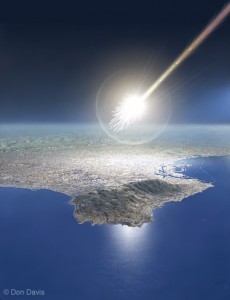
Today I found out about the Tunguska Event, which was a 1908 explosion estimated to have been nearly 1000 times more powerful than the atomic bomb dropped on Hiroshima in 1945 and about 1/3 as powerful as the largest ever detonated atomic bomb, the Tsar Bomba.

The Tunguska event occurred around 7:00 a.m. local time on June 30, 1908 near the Podkamennaya Tunguska River in Siberia.  Witnesses saw a “blue-ish light, nearly as bright as the Sun, moving across the sky.”  What followed was an estimated 15 megaton explosion which knocked over about 80 million trees in about a 1300 square mile area, forming a butterfly shape pattern.  This also sent a shock wave throughout parts of Europe and Asia, registering as far away as England (about 4000 miles away).  Further, the atmospheric pressure change was also significant enough to be measured all the way in Great Brittan. Another interesting side effect of this blast was that, for several days after the blast throughout most of Asia and Europe, the night sky glowed.  It was so bright that people as far away as China reportedly were able to read in the middle of the night by nothing but the glow of the sky.

For a firsthand account, here is the testimony of one S. Semenov, who was about 40 miles from ground zero:

“At breakfast time I was sitting by the house at Vanavara Trading Post (65 km from the epicenter), facing north… I suddenly saw that directly to the north, over Onkoul’s Tunguska Road, the sky split in two and fire appeared high and wide over the forest. The split in the sky grew larger, and the entire northern side was covered with fire. At that moment, I became so hot that I couldn’t bear it, as if my shirt was on fire; from the northern side, where the fire was, came strong heat. I wanted to tear off my shirt and throw it down, but then the sky shut closed, and a strong thump sounded, and I was thrown a few meters. I lost my senses for a moment, but then my wife ran out and led me to the house. After that such noise came, as if rocks were falling or cannons were firing, the earth shook, and when I was on the ground, I pressed my head down, fearing rocks would smash it. When the sky opened up, hot wind raced between the houses, like from cannons, which left traces in the ground like pathways, and it damaged some crops. Later we saw that many windows were shattered, and in the barn a part of the iron lock snapped.”

So what caused this massive blast?  For a long time, it wasn’t precisely known.  When the event first happened, it drew little interest largely because it happened in a very remote part of the world.  It wasn’t until some 19 years later that Leonid Kulik, a Russian mineralogist, decided to go investigate, figuring that a massive meteorite must have hit the Earth.

Kulik and his team had little trouble locating ground zero of the blast, despite it being 19 years later, due to the fact that the “trees acted as markers, pointing directly away from the blast’s epicenter”.  However, once they got to the epicenter, they found a curious thing.  There was no crater, as they had expected, and the trees were still standing in about a 3 mile radius circle at the center, but with their limbs, bark, leaves, etc. all completely stripped.  So essentially, all these trees were just giant poles in the ground with all the other trees for miles and miles around blasted to the ground.
For a long time, there was much debate over exactly what caused this, but today scientists are reasonably certain it was a comet, rather than an asteroid (see the difference between a comet and an asteroid) or other naturally occurring event.  The comet must have been around 30-40 meters across (around 120 feet) and must have been traveling around 30,000-40,000 mph (about 55,000-65,000 km/h).  As it traveled through the atmosphere, the air around it heated up to as much as 50,000 degrees Fahrenheit (about 28,000 degrees Celsius) causing the comet to look like a giant fireball streaking through the sky.  Eventually, this also caused the comet to annihilate itself around 5 miles (8 km) above the Earth’s surface in a fiery blast that consumed the comet, which was largely made of ice.  Thus, you get a massive explosion, but no impact crater or much of any apparent evidence of what caused the explosion, unless you witness it or start taking very careful soil samples and the like.
Bonus Factoids:
  • It’s estimated that a Tunguska sized comet or asteroid should hit the Earth’s atmosphere about once every 300 years.  The blast from it is more than sufficient to wipe out even the largest city on Earth, should it happen to blow up or strike around a major city.
  • A comet or asteroid about 1/3 of the size of the Tunguska comet hits the Earth’s atmosphere about one or more times per year and produces a blast of around 20 kilotons, which is about equivalent to the nuclear bomb dropped on Nagasaki.  Luckily, these tend to annihilate themselves quite high in the atmosphere.
  • In order to get the Soviet government to pay for his expedition to go investigate this blast, Kulik convinced them that it must have been a meteorite and that meteorite would have been massive and made mostly of iron, so there was great potential for a huge supply of easily minable iron available that the Soviet’s could use.
  • Remarkably, it appears that no one actually died from this blast, thanks to the fact that it happened in such a remote part of the world.  However, many farmers and herders near the area lost their livelihood thanks to the explosion.
  • It wasn’t until nuclear testing that these same blast patterns would be observed again, including the stripping of trees around ground zero with the other trees being blasted down.  What’ happening here is the shock wave travels so fast that there is insufficient time for the branches to transfer the force to the main part of the tree before they are ripped off.  For those trees in the epicenter, the force is all downward, so the result is simply that the branches and bark all get stripped, but the trees remain standing.  Outside of the epicenter, the shock-wave hits the trees at more of a horizontal angle, so it flattens them.  Eventually, Soviet experimenters were able to even mimic the butterfly blast pattern with a model forest and small charges.  From this, they discovered that the blast must have occurred with the blasting body approaching at around a 30 degree angle from the ground and 115 degrees from North.
  • It’s possible that other such explosions have happened in recent history, but unfortunately it wasn’t until around the 1960s-1970s that we had the capability to accurately detect these if they happened somewhere where people wouldn’t directly observe them, such as over the oceans of the Earth or the like.
  • The U.S. built a nuclear bomb that was roughly equivalent to the Tunguska comet, in terms of blast power, being rated at around 15 megatons.  This nuclear bomb was named Castle Bravo and was detonated on March 1, 1954.
  • The Tsar Bomba (see video showing the detonation below), the largest nuclear bomb ever detonated, had a yield of around 50 megatons.  Originally, it was designed to have a yield of 100 megatons, but was reduced due to concerns over nuclear fallout.  Not only was it the largest nuclear bomb detonated, but it was also one of the cleanest, relative to the TNT equivalent output.  It was detonated on October 30, 1961.
  • The Hiroshima and Nagasaki bombs, on the other hand, were very small compared to the Tsar Bomba and were not that efficient.  The Hiroshima bomb was estimated at about only 13 kilotons of TNT (1/3800th the size of the Tsar Bomba) with the total blast destructive zone only being about one mile in radius.  Including resulting fires, it destroyed about 5 square miles of the city or about 69% of the buildings, killing 70,000 people upon detonation with an additional 70,000 seriously injured.   Around 90% of all medical staff and facilities were destroyed in the explosion itself; that, combined with the effects of radiation burns and sickness, contributed to about an additional 150,000 people dead at various points thanks to the blast, though many survived for years to come before succumbing to cancer and other such sicknesses brought on by heavy ionizing radiation exposure.
  • Nagasaki, on the other hand, had significantly less casualties, partially due to the fact that conventional bombs were dropped on it before hand, so many of the people, particularly school aged children, were evacuated from the city by the time the nuclear bomb was dropped.  This explosion was 21 kilotons, with casualties reaching a still staggering number of around 40,000 people instantly, with around triple that number estimated overall.
  • Before the Hiroshima and Nagasaki bombs were dropped, the U.S. government warned the Japanese, though not directly mentioning the nuclear bombs, and asked them to surrender.  The Japanese of course refused, as, at that point, they were ignorant of the successful development of a nuclear bomb and, thus, had no reason to think the U.S. could follow through with their threat to utterly destroy Japan, if necessary.  The U.S. had originally planned a series of much larger nuclear strikes that would happen in quick succession after the Hiroshima and Nagasaki bombs, wiping out most of the major cities in Japan, had the Japanese at that point not agreed to surrender.
Tsar Bomba
Sources:
Posted: 31 Oct 2011 05:06 AM PDT


Today I found out the Bluetooth standard is named after a 10th century Scandinavian king.
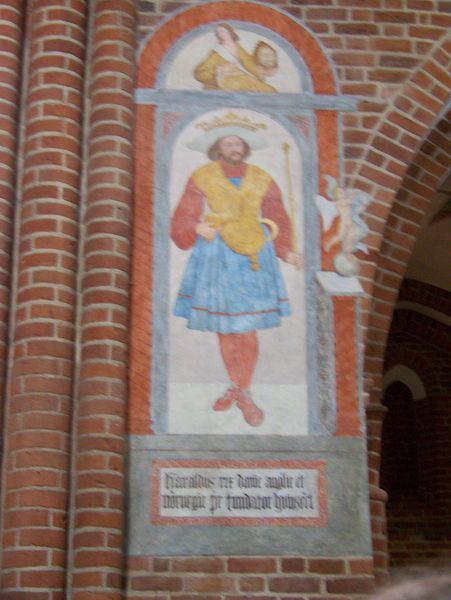
The man was Harald I of Denmark.  “Bluetooth” is the English translation of “Blåtand”, which was an epithet of Harald I (Harald Blåtand Gormsson).  Legend has it, he received this name due to being extremely fond of blueberries and consuming them so regularly and in such volume that they stained his teeth blue.

The Bluetooth standard was originally developed by Jaap Haartsen and Sven Mattisson in 1994, working at Ericcson in Sweden.  Because Bluetooth was meant to offer a set unified standard, replacing a variety of competing protocols, particularly the somewhat antiquated RS-232, they decided to name it after the 10th century king, Harald Blåtand Gormsson, who completed his father’s work of unifying the various Danish tribes into one Danish kingdom around 970. Although, he was only able to maintain this unification for a few years.

The name Bluetooth wasn’t originally necessarily meant to be the final name of the standard.  When they first named it thus, it was just a code name for the technology.  It ultimately ended up sticking though and became the official name of the standard.

The Bluetooth logo also derives from “Harald Blåtand”, with the long-branch Nordic runes for “H” and “B” comprising the design you see in the blue oval of the logo.
Bonus Factoids:
  • Although the wireless Bluetooth standard was developed to be ultra low power and short range, with proper directional antennas and focusing, researches have been able to achieve a range of a little over one mile with a standard Class 2 Bluetooth device which is supposed to only have a maximum range of around 30 feet.
  • Nearly 95% of all mobile phones have Bluetooth capabilities.
  • Because Bluetooth devices are now so prevalent and the standard itself has some security flaws, they have relatively recently become targets of attacks, such as the 2005 Lasco.A worm, which targeted mobile phones using the Symbian OS.  Any of those devices with their Bluetooth enabled could replicate themselves to other Bluetooth enabled devices of the same type within range.
  • Also in 2005, thieves looking for expensive devices in cars would use their own Bluetooth enabled device to locate other Bluetooth enabled devices left in the cars.  Once located, the thieves would then break into the cars and steal the devices.
  • Since 1998, the Bluetooth standard has been managed by Bluetooth SIG (Special Interest Group) which is currently comprised of over 14,000 telecommunication companies across the globe, such as Ericsson, IBM, Toshiba, Intel, Nokia, etc.
  •  
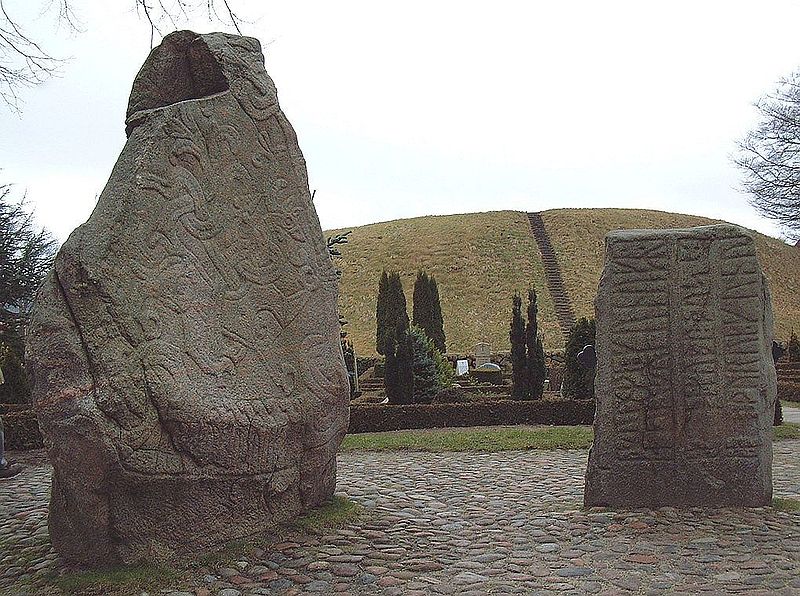
  • Harald I of Denmark was the offspring of King Gorm the Old and Thyra Dannebod.  The famed Jelling stones at Jelling church in Denmark were erected in honor of King Gorm and Thyra. The runes read:  “King Harold bade these memorials to be made after Gorm, his father, and Thyra, his mother. The Harold who won the whole of Denmark and Norway and turned the Danes to Christianity.”  These stones are particularly famous in Denmark due to being a symbol of when Denmark first became a nation state.
  • Harald I was able to maintain control of Norway for only a short time before losing to the Germans near Danevirke in 974, which subsequently saw him lose control of many of the tribes under his rule and saw the Germans re-take much of the land bordering Scandinavia and Germany.
  • Harald I and certain West Slavic tribes were able to drive out the Germans in 983.  However, shortly thereafter, Harald I’s son, Swein, is thought to have led a rebellion against is father, which ultimately lead to the death of Harald I around 985-986.
Sources:

BEAUTY AND HEALTH


FIRST LADY

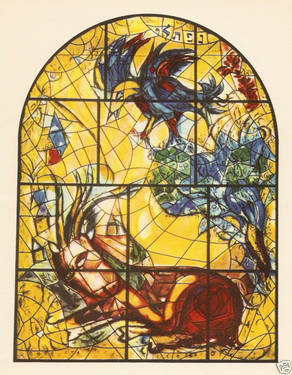
Marc Chagall (July 7, 1887 — March 28, 1985), was a Belarusian Jewish artist associated with several key art movements and was one of the most successful artists of the twentieth century. He forged a unique career in virtually every artistic medium, including paintings, book illustrations, stained glass, stage sets, ceramics, tapestries and fine art prints. Chagall’s haunting, exuberant, and poetic images have enjoyed universal appeal, and art critic Robert Hughes called him “the quintessential Jewish artist of the twentieth century.”

As a pioneer of modernism and one of the greatest figurative artists of the twentieth century, Marc Chagall achieved fame and fortune, and over the course of a long career created some of the best-known and most-loved paintings of our time. According to art historian Michael J. Lewis, Chagall was considered to be “the last survivor of the first generation of European modernists.” For decades he “had also been respected as the world’s preeminent Jewish artist.” He also accepted many non-Jewish commissions, including a stained glass for the cathedrals of Reims and Metz, a Dag Hammarskjold memorial at the United Nations, and the great ceiling mural in the Paris Opera.

His most vital work was made on the eve of World War I, when he traveled between St. Petersburg, Paris, and Berlin. During this period he created his own mixture and style of modern art based on his visions of Eastern European Jewish folk culture. He spent his wartime years in Russia, and the October Revolution of 1917 brought Chagall both opportunity and peril. He was by now one of the Soviet Union’s most distinguished artists and a member of the modernist avante-garde. He founded the Vitebsk Arts College, which was considered the most distinguished school of art in the Soviet Union. However, “Chagall was considered a non-person by the Soviets because he was Jewish and a painter whose work did not celebrate the heroics of the Soviet people.” As a result, he soon moved to Paris with his wife, never to return.

He was known to have two basic reputations, writes Lewis — as a pioneer of modernism, and as a major Jewish artist. He experienced modernism’s golden age in Paris, where “he synthesized the art forms of Cubism, Symbolism, and Fauvism, and the influence of Fauvism gave rise to Surrealism.” Yet throughout these phases of his style “he remained most emphatically a Jewish artist, whose work was one long dreamy reverie of life in his native village of Vitebsk.” “When Matisse dies,” Pablo Picasso remarked in the 1950s, “Chagall will be the only painter left who understands what color really is.”

Read more: http://miami.ebayclassifieds.com/antiques/miami/marc-chagall-to-russia-limited-edition-lithograph/?ad=6189350#ixzz16Rmc2G

Monday, October 3, 2011

WAYS AND MEMES OCTOBER FLITTER 2011


Prayer of Invocation

From the point of Light within the Mind of God
Let light stream forth into the minds of men.
Let Light descend on Earth.

From the point of Love within the Heart of God
Let love stream forth into the hearts of men.
May * Christ return to Earth.

From the centre where the Will of God is known
Let purpose guide the little wills of men --
The purpose which the Masters know and serve.

From the centre which we call the race of men
Let the Plan of Love and Light work out.
And may it seal the door where evil dwells.

Let Light and Love and Power
restore the Plan on Earth.
the great invocation - Maitreya


MEDITATION
The word, which is often translated simply as prayer, means literally’wish-path’ (Tibetan: smon-lam). It is not a request to an external deity, but a  method of purifying and directing the mind. It acts as inspiration by arousing the mind’s inherent desire for good, which attracts the fulfillment of its aim.
The Tibetan Book of the Dead

Let my heart be the vessel of God’s Love.

Let my thoughts be the blossom of God’s Love.

Let my words be the expression of God’s Love.

Let my actions be the fulfillment of God’s Love.
willingness - david ridge


Om bhurbhuvah swah tatsaviturvarenyam
bhargo devaasya dhimahi dhiyo yonah prachodayat


Christian Science Prayer

“Thy kingdom come;”
let the reign of divine Truth, Life, and Love
be established in me, and
rule out of me all sin;
and may Thy Word enrich
the affections of all mankind,
and govern them!
Mary Baker Eddy - 1821-1910

http://www.worldprayers.org/


From the book Virus of the Mind by Richard Brodie


We are the result of a billion years worth of mistakes that turned out to be better after all.


Level 3 of Consciousness

You are reading about something that most people don’t even know exists. If you told them, they wouldn’t just not believe you—they would have no clue what you were talking about. That’s why I wrote this little essay: so that I could show it to someone when they had no idea what I was talking about and, if they were persistent and open-minded, make some progress in their thinking. And meanwhile I could get on with my other projects.

1. In the beginning, there was attraction. Things attract each other because they like to be closer to some things than other things. This is the root of all change in the whole universe.

Sometimes like attracts like and sometimes opposite attracts opposite. When opposites attract, you’ve got a pair, a couple. That pair is now another unit and you can start the whole process over again. The pair, the new unit, can attract an opposite or a like or just drift along.

When like attracts like, it can end there, like an oxygen molecule made up of two oxygen atoms, or it can continue to attract like, like a Carbon atom. When things continue to attract like, something big gets created.

2. Sometimes a thing will attract just the right stuff to it that the new stuff turns into another copy of the thing. That is self-replication. Self-replication is the most powerful force in the universe. One becomes two, two become four, four become eight, and soon the universe is full of things.

Sometimes a self-replicating thing makes a copy of itself with a mistake in it. The thing with a mistake will either be better, worse, or the same at making copies of itself. If it’s better, there will soon be more copies of the new thing than the old thing in the universe.

The only way for new things to get created is by a complex series of mistakes that turn out to be better after all.

3. We are self-replicating things. We are the result of a billion years worth of mistakes that turned out to be better after all.

4. One big mistake that turned out to be better after all was that, of all the animals, we alone can communicate complicated ideas. We can tell stories. We can share recipes. We can make complicated plans. Even dolphins and whales can’t do these things, we think.

5. These ideas that we communicate are called memes. Memes are a kind of thing. Memes live in our minds.

6. Like all things, memes fit better with some things than others. Some memes naturally fit better in people’s minds. Some memes naturally fit better with other memes. When a group of memes fit well together and pull the strings of someone’s mouth and vocal cords so that they pass them on to others, a new, self-replicating thing gets created. The new thing is called a memeplex.

Self-replication is the most powerful force in the universe. One person tells two, two tell four, four tell eight, and pretty soon the whole universe is full of people sharing the memeplex.

Sometimes a self-replicating memeplex makes a mistake in copying itself. The memeplex with a mistake in it will either be better, worse, or the same at making copies of itself. If it’s better soon there will be more copies of the new memeplex than the old in the universe.

The only way for a new idea to gain acceptance is by a series of copying mistakes that turn out to be better after all.

7. All our belief systems, religions, and governments are the result of a series of mistakes that turned out to be better at making copies of themselves after all.

8. Every new idea we think of immediately becomes transformed by copying mistakes that change it into something that is better at making copies of itself after all. A key part of the idea may be sacrificed to something better for copying.

The only control we have over the spread of our ideas is in making them as resistant to copying mistakes as possible.

9. When we are born, our mind is courted by meme after meme after meme, all the result of thousands of years of practice at getting themselves copied into fresh new minds. This is Level 1. We have our instincts, born of millions of years of the genes our body carries striving to make copies of themselves.

Soon our minds become filled with memes and eventually we may develop a map of life that mostly makes sense. We speak a language that we believe expresses anything we want to say. We use geometric and physical concepts that we believe explain anything we encounter. We know stories and myths that we believe relate to all of life’s trials and tribulations. This is Level 2. We have our roadmap, born of thousands of years of the memes our mind carries striving to make copies of themselves.

10. Each of us has a purpose here. When the memes are quiet, it is possible to feel when we are on purpose and when we are off purpose.

11. Once we realize that there are millions of memes battling inside our mind, there arises the possibility of influencing the outcome of that battle. Until we realize it, there is no possibility.

The battle can be influenced in three ways. First, by noticing the memes. Second, by detaching from them. Third, by obtaining clarity of purpose.

When these three steps are achieved, we can begin to select our memes consciously. We select memes that keep us on purpose. This is Level 3.

12. A purpose is not a goal. A purpose does not feel like guilt, shame, or vengeance. Guilt, shame, and vengeance are emotions used by memes to gain mastery over your life. By choosing memes consciously, we can eliminate the control that memes have over those emotions.

A purpose feels fulfilling, satisfying, joyful, and powerful.

13. A purpose has to do with other people. A purpose is fulfilled by spreading memes. Every time we speak, write, create, or act we are spreading memes. To fulfill our purpose we must be conscious of which memes we are spreading.

Life is largely composed of conversations. Conversations are composed of memes. In Level 1 we are unaware of this. In Level 2 we see the world as a solid, understandable body to be interacted with. In Level 3 we see the world as a canvas to be painted, an instrument to be played, or a block of marble to be sculpted by us for our purpose. We choose to do this for good or for evil. If we choose good, good is returned to us in unexpected ways. If we choose evil, evil is returned. Either way, it looks like the way we choose is the way of the world.

14. In Level 1, we do not understand the world and consequently fear it. In Level 2, we replace the fear with understanding. The price of understanding is limits. Our approximate models of the universe are never completely accurate, never useful in all situations.

In Level 3, we start with a vision of what we want to create. From there we choose our models. Sometimes a chosen model may seem insane to the other inhabitants of the little patch of space-time we happen to occupy. No matter. Men with a vision of goodwill have often looked insane in times of mistrust and scarcity. But in Level 3, we realize that the universe is not a maze to be navigated; it is a baby to be brought up. When we give it love, clarity, and opportunity, we raise a child to be a joyful, giving, successful adult. This is the opportunity we have to farm our little patch of space-time.

Richard Brodie
June 1999


They Teach This at Stanford University

“I just finished taking an evening class at Stanford. The last lecture was on the mind-body connection - the relationship between stress and disease. The speaker (head of psychiatry at Stanford) said, among other things, that one of the best things that a man could do for his health is to be married to a woman, whereas for a woman, one of the best things she could do for her health was to nurture her relationships with her girlfriends.

At first everyone laughed, but he was serious.

Women connect with each other differently and provide support systems that help each other to deal with stress and difficult life experiences. Physically this quality “girlfriend time” helps us to create more serotonin - a neurotransmitter that helps combat depression and can create a general feeling of well being. Women share feelings whereas men often form relationships around activities. They rarely sit down with a buddy and talk about how they feel about certain things or how their personal lives are going. Jobs? Yes. Sports? Yes. Cars? Yes. Fishing, hunting, golf? Yes. But their feelings? Rarely.

Women do it all of the time. We share from our souls with our sisters/mothers, and evidently that is very good for our health. He said that spending time with a friend is just as important to our general health as jogging or working out at a gym.

There’s a tendency to think that when we are “exercising” we are doing something good for our bodies, but when we are hanging out with friends, we are wasting our time and should be more productively engaged—not true. In fact, he said that failure to create and maintain quality personal relationships with other humans is as dangerous to our physical health as smoking!

So every time you hang out to schmooze with a gal pal, just pat yourself on the back and congratulate yourself for doing something good for your health! We are indeed very, very lucky. Sooooo let’s toast to our friendship with our girlfriends. Evidently it’s very good for our health.”

The Earth Is Full
By THOMAS L. FRIEDMAN
Published: June 7, 2011
---------------------------------

“Existence leans its mouth
toward me,
because my love
cares for
it.”

—Meister Eckhart. By way of Love is a Place.
----------------------------------------------------


“There is that which precedes heaven and earth.
It is formless, nameless.
The eye cannot perceive it.
To speak of it as mind or Buddha is inexact,
then it becomes again something in our imagination.
The Tao cannot be expressed in words.”

—Daito Kokushi
-------------------

“Owing to the inferior side of his nature, in which the human being habitually passes his life, he generally looks but does not see, he listens but does not hear. The higher aspect of himself, the sole means through which he can look and truly see, listen and truly hear, is concealed from him behind the unceasing wants and noises of the physical world around him and his ordinary self. His mind is clouded with a quasi-interminable stream of absurd thoughts, aching desires, anxieties, and the pains of living, all of which keep him incessantly preoccupied, ever drawing him away from where he should be rightly centered in himself in the felicity of his Supreme Being.”

—Edward Salim Michael, “The Law of Attention: Nada Yoga and the Way of Inner Vigilance,” p.213
--------------------------

Next Month "Ye Are The Salt Of The Earth."

Saturday, September 10, 2011

SEPTEMBER FLITTER

Church services resume Sunday September 11, 2011 at 10 a.m. in the Chrysalis Santuary on Mercer's Fernery Road in DeLand, FL

Pastor Skuli Thorallson will be officiating. All faiths are welcome. We offer a program based on the wisdom of the ages and every program is followed by an open discussion and question and answer period. 

Home made refreshments are available, coffees of different flavors, and fresh fruits.

Welcome! Please join our small group of steadfast worshipers


Today's Affirmation

There is a Power and a Presence within me. It is all knowing, all caring, all loving, all powerful. It is the completeness of the Universe, individualized as me. It is who I am, It is what I am. It is God as me now.

Göbekli Tepe: Older Than Stonehenge, Pyramids, Anything

— Filed under: People & Culture
 
Part of a megalithic structure at Göbekli Tepe...
Image via Wikipedia
Monolith at Göbekli Tepe
When people think of ancient temples, they often think of Stonehenge, which most archaeologists agree was built about 5,000 years ago. But Stonehenge is actually trumped handily by a little-known site in modern-day Turkey called Göbekli Tepe, which is 11,500 years old. The site is composed of circular rings and T-shaped monoliths, many with carvings of animals on them.

Although Göbekli Tepe (which means “potbelly hill”) got a bit of press in 2008 when The Guardian and Smithsonian Magazine ran articles about its newly realized importance, it didn’t really receive the wider public acclaim and notice that it deserved. According to many archaeologists, this is one of the most exciting finds ever unearthed, a real game-changer in terms of our understanding of civilization, settlement, agriculture, and religion.

The sculpture of an animal at Gobekli Tepe, cl...
Image via Wikipedia

What does this carving mean?
Previously, it was generally believed that humans settled, started farming, and built residential buildings before they built temples. That assumption is now being turned on its head, as it appears that Göbekli Tepe was built by hunter-gatherers as a place of worship, the world’s first temple. The Smithsonian article states:
"Scholars have long believed that only after people learned to farm and live in settled communities did they have the time, organization and resources to construct temples and support complicated social structures. But [excavation leader] Schmidt argues it was the other way around: the extensive, coordinated effort to build the monoliths literally laid the groundwork for the development of complex societies."
Ian Hodder, Stanford University professor of anthropology, elaborates:
"Everybody used to think only complex, hierarchical civilisations could build such monumental sites, and that they only came about with the invention of agriculture. Gobekli changes everything. It's elaborate, it's complex and it is pre-agricultural. That alone makes the site one of the most important archaeological finds in a very long time."
To put it in context, Göbekli Tepe “predates pottery, metallurgy, and the invention of writing or the wheel,” as well as the Pyramids, the walls of Jericho, and just about every other ancient building found so far. Hodder continues, "Many people think that it changes everything It overturns the whole apple cart. All our theories were wrong."

Urfa - Göbekli Tepe #1
Image by Deniz Tortum via Flickr

The exact function of the megalithic complex remains under investigation, as the excavation is ongoing and could take many more years. Klaus Schmidt, the German archaeologist leading the effort, believes that Göbekli Tepe was used by a death cult. Others suggest that it represents the beginning of cultivation of plants, especially grains.

Why did ancient pre-Neolithic hunter-gatherers (who didn’t generally live in one place) build such a large structure? What did they use it for? Why was it intentionally buried by hundreds of cubic meters of soil in 8,000 BC? What does this discovery mean for our understanding of the timelines of agriculture and religion? Are the animal carvings, as Schmidt puts it, "the earliest representation of gods?"


“If you want to be happy, be.” — Leo Tolstoy

“In the name of God, stop a moment, cease your work, look around you.”
— Leo Tolstoy

“Remember that there is only one important time and that is now. The present moment is the only time over which we have dominion. The most important person is always the person you are with, who is right before you, for who knows if you will have dealings with any other person in the future? The most important pursuit is making the person standing at your side happy, for that alone is the pursuit of life.”
— Leo Tolstoy

“There is something in the human spirit that will survive and prevail, there is a tiny and brilliant light burning in the heart of man that will not go out no matter how dark the world becomes. ”

 — Leo Tolstoy


Each situation is stated; followed by the necessary elements for each situation.
  1. Supplication
  2. Deliverance
  3. Crime pursued by vengeance
    • a Criminal; an Avenger
  4. Vengeance taken for kin upon kin
    • Guilty Kinsman; an Avenging Kinsman; remembrance of the Victim, a relative of both
  5. Pursuit
  6. Disaster
  7. Falling prey to cruelty/misfortune
  8. Revolt
  9. Daring enterprise
  10. Abduction
  11. The enigma
  12. Obtaining
    • (a Solicitor & an Adversary who is refusing) or (an Arbitrator & Opposing Parties)
  13. Enmity of kin
  14. Rivalry of kin
    • the Preferred Kinsman; the Rejected Kinsman; the Object of Rivalry
  15. Murderous adultery
    • two Adulterers; a Betrayed Spouse
  16. Madness
    • a Madman; a Victim
  17. Fatal imprudence
    • the Imprudent; a Victim or an Object Lost
  18. Involuntary crimes of love
  19. Slaying of kin unrecognized
    • the Slayer; an Unrecognized Victim
  20. Self-sacrifice for an ideal
  21. Self-sacrifice for kin
    • a Hero; a Kinsman; a Creditor or a Person/Thing sacrificed
  22. All sacrificed for passion
    • a Lover; an Object of fatal Passion; the Person/Thing sacrificed
  23. Necessity of sacrificing loved ones
    • a Hero; a Beloved Victim; the Necessity for the Sacrifice
  24. Rivalry of superior vs. inferior
    • a Superior Rival; an Inferior Rival; the Object of Rivalry
  25. Adultery
  26. Crimes of love
    • a Lover; the Beloved
  27. Discovery of the dishonour of a loved one
    • a Discoverer; the Guilty One
  28. Obstacles to love
    • two Lovers; an Obstacle
  29. An enemy loved
    • a Lover; the Beloved Enemy; the Hater
  30. Ambition
    • an Ambitious Person; a Thing Coveted; an Adversary
  31. Conflict with a god
  32. Mistaken jealousy
    • a Jealous One; an Object of whose Possession He is Jealous; a Supposed Accomplice; a Cause or an Author of the Mistake
  33. Erroneous judgement
    • a Mistaken One; a Victim of the Mistake; a Cause or Author of the Mistake; the Guilty One
  34. Remorse
    • a Culprit; a Victim or the Sin; an Interrogator
  35. Recovery of a lost one
  36. Loss of loved ones


Polynesian God -- does he look happy?

African Poetry


  Next month the long awaited treatise on Alternative Healing, a compilation of research hours on the internet and interviews with doctors, and dispensers of natural healing methods and potions. 


Namaste